
Fencing Contractors in Ireland, Priced by the Metre
Pick the fence style and rough metre run. See realistic Irish supply-and-fit rates up front. Then one local contractor rings you with a firm written price.
Free, no obligation. One local contractor prices it, not five.
- €85 to €165/mconcrete post & panel fence, fitted
- 20 to 25 yrsconcrete H-posts & gravel boards lifespan
- 2.0 m / 1.2 mrear and front height cap, Class 5
- 1,836,728occupied private Irish homes, Census 2022
Six fence systems Irish homes and farms actually fit
Tap any system for real metre pricing, concrete footing specs and weather performance.
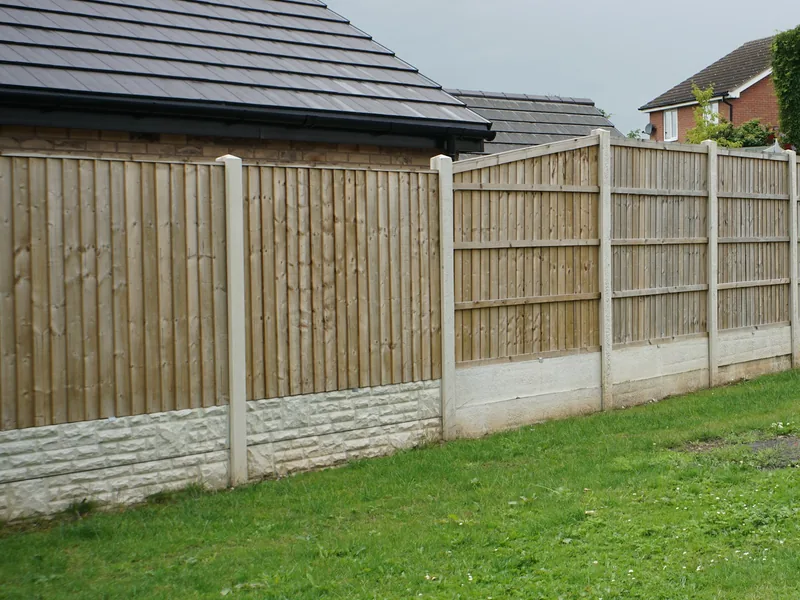 Concrete H-posts & timber panels€85–€145/m fitted
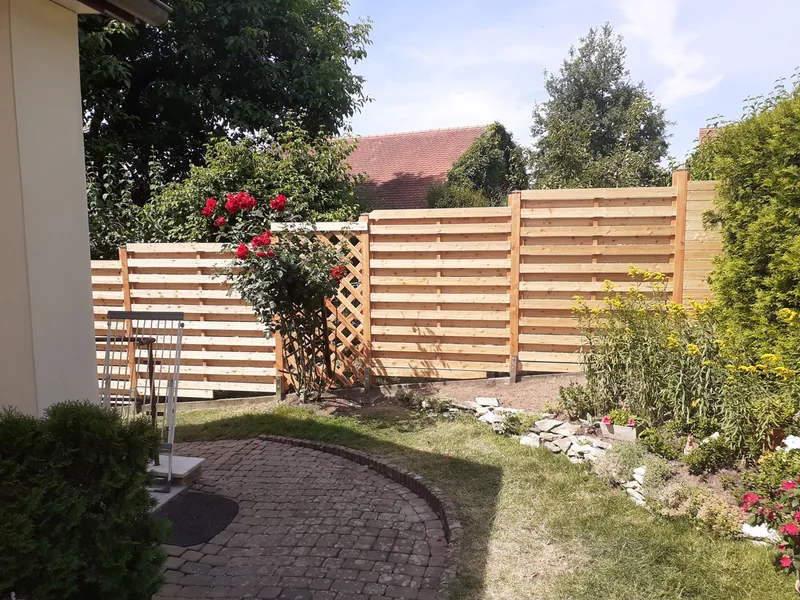 Hit-and-miss & slatted wind-proof timber fencing€110–€175/m fitted
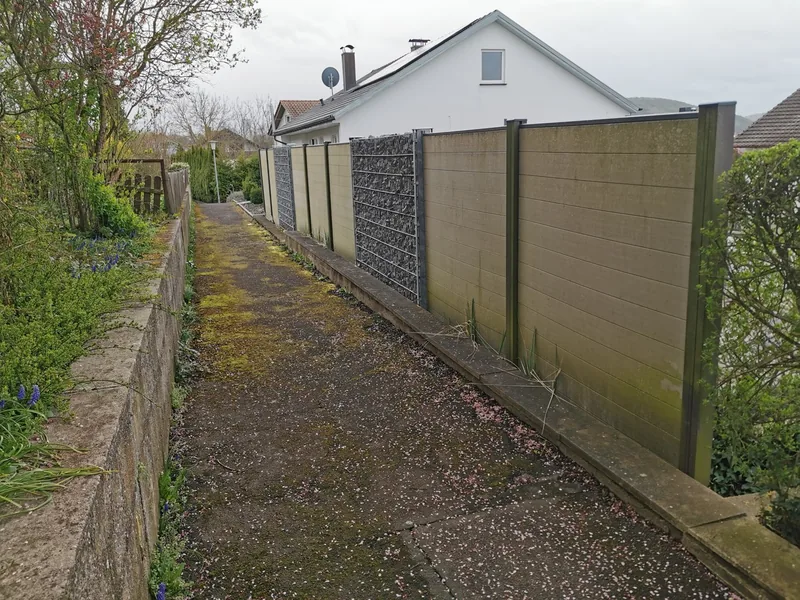 Composite privacy fencing€160–€250/m fitted
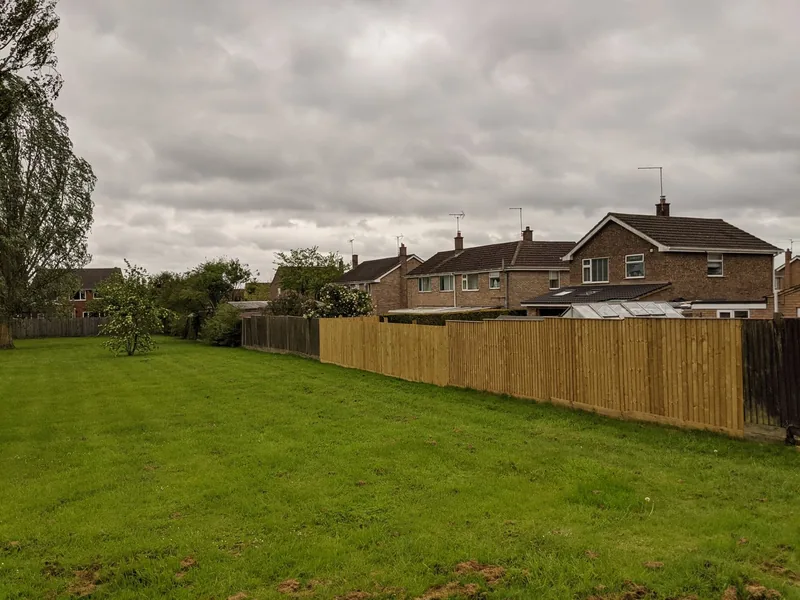 Pressure-treated closeboard / feather-edge fencing€90–€140/m fitted
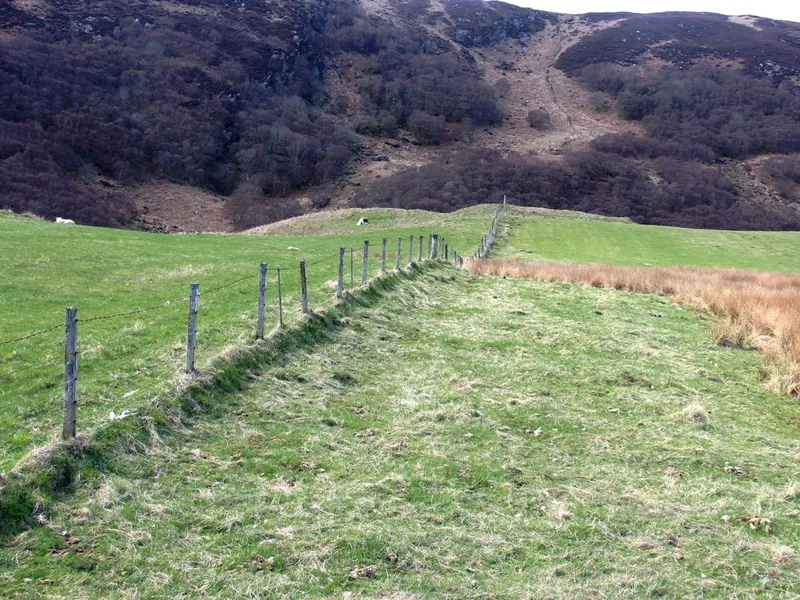 Timber post-and-rail & farm stock fencing€18–€48/m fitted
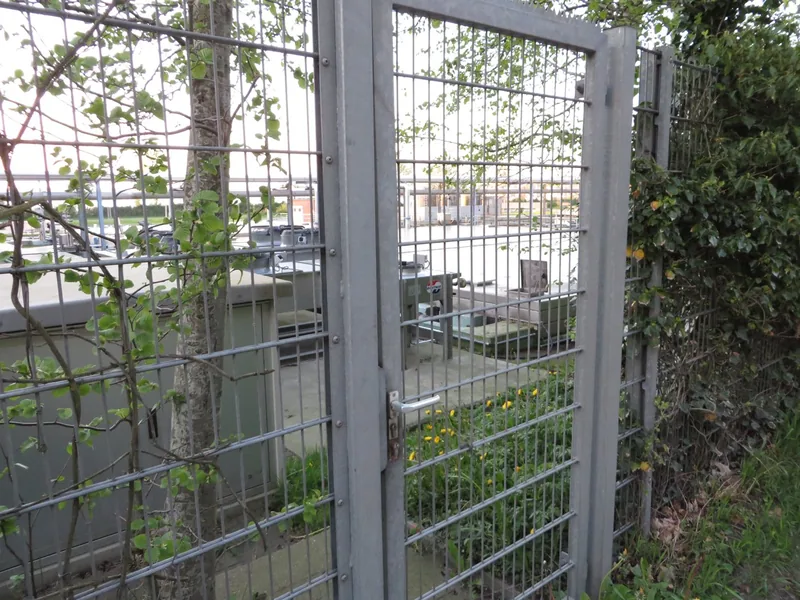 Commercial mesh & boundary replacement€75–€160/m fitted
Price my fence
Four taps show your fitted price guide before we ask for a phone number. One local fencing contractor rings you, not five.
Concrete H-posts and timber panels, 15 m to 30 m, on clear level ground (€85 to €145/m): €1,550 to €4,050, supplied and fitted.
How the price is worked out
The range multiplies current Irish supply-and-fit rates per linear metre by the chosen run length, adding a per-metre allowance if an old fence has to be stripped and disposed of or if bays must be stepped along sloping, stony or root-bound ground. Standard residential prices assume 1.8 m height with concrete footings at least 600 mm deep. Matching pedestrian gates, tree-stump removal, rock breakers and narrow through-house carries are confirmed on a site look. Ask whether VAT is charged at 13.5% or 23%. Only a contractor who inspects the boundary line gives a firm written quote.
How a boundary replacement runs from start to finish
- Check the metre cost hereTap your fence style, rough garden length and ground conditions to see realistic Irish figures first.
- One local contractor walks the lineSend your outline and a single contractor in your county calls to measure gradients, access and old post holes.
- Posts concreted, bays levelled, site clearedH-posts set 600 mm deep, gravel boards slotted clear of wet grass and every offcut cleared before balance payment.
Shallow timber stakes, or a storm-ready boundary
Cheap shallow stakes
- Timber posts buried 300 mm deep rot at soil level inside six winters
- Old panel disposal, gravel boards or sloped bays billed late
- Multiple crews cold-calling from a shared lead directory
Storm-ready concrete & UC4 spec
- Per-metre guide shown on screen before you leave a phone number
- 600 mm concrete footings, concrete gravel boards and wind-rated panels
- One local fencing contractor measures your garden and quotes in writing
Four straight answers before anyone calls out
- Will I be hounded with calls?
- No. Your outline goes to a single fencing contractor in your county, and nobody else. It is never resold to a multi-quote directory.
- Do I need council permission to replace a garden fence?
- Side and rear garden fences up to 2 m high and front fences up to 1.2 m are normally exempt under Class 5, unless an estate open-plan condition applies.
- Who pays when a shared boundary fence blows down?
- Shared boundaries fall under the Land and Conveyancing Law Reform Act 2009. Check your folio map, talk to your neighbour early and split agreed replacement costs in writing.
- How long does a typical semi-D garden fence take to fit?
- Most 15 m to 30 m residential runs take 1 to 2 days on site, including stripping an old timber fence and concreting new H-posts.
Check your boundary cost before booking a visit
Pick the fence style, rough metre run and whether an old boundary has to come out. One written quote comes back from a single fencing contractor in your county.
Irish fencing rates compared by system
Standard 1.8 m garden boundaries on level ground before old fence strip-out or matching side gates.
Concrete H-posts & panels
- Supplied & fitted rate
- €85–€145/m
- Typical 22 m semi-D run
- €1,900–€3,200
- Wind performance
- Solid bay; lift panels out cleanly
- Expected service life
- 20 to 25 yrs posts; 10 to 15 yrs panels
Hit-and-miss timber
- Supplied & fitted rate
- €110–€175/m
- Typical 22 m semi-D run
- €2,450–€3,850
- Wind performance
- 20% to 30% air bleed cuts sail load
- Expected service life
- 15 to 20 yrs with UC4 timber
Composite privacy
- Supplied & fitted rate
- €160–€250/m
- Typical 22 m semi-D run
- €3,500–€5,500
- Wind performance
- Heavy rigid boards; deep footings needed
- Expected service life
- 20 to 25 yrs; wash down only
Closeboard timber
- Supplied & fitted rate
- €90–€140/m
- Typical 22 m semi-D run
- €2,000–€3,100
- Wind performance
- Strong arris rails; handles slopes well
- Expected service life
- 12 to 18 yrs with concrete gravel board
Every extra cost line, including rock-face gravel boards, old concrete breakout, matching gates and full precast panels (up to €165/m), is broken down on fencing cost per metre in Ireland.
Typical run totals across Irish gardens and paddocks
Pacing along the grass gives a quick estimate. Contractors measure exact bay centres on site.
Removing a rotted boundary adds €10 to €18/m for strip-out and haulage. Read old fence removal and sloping gardens and UC4 timber vs composite vs concrete.
Why Atlantic winter storms snap shallow Irish fences
Two ground-level details decide whether a new fence survives ten winters or blows flat in two.
- Set every post at least 600 mm deep in concrete. A 1.8 m solid panel catches heavy gusts like a yacht sail. Standard 2.4 m concrete H-posts buried 600 mm deep (750 mm on exposed western sites) anchor the bay instead of pivoting in wet clay.
- Lift timber clear with a 300 mm concrete gravel board. Wet lawn soil and strimmer nicking rot bottom panel rails fast. Slotting panels on top of precast gravel boards keeps wood dry and lets single damaged panels slide out without digging up posts.
- Use hit-and-miss boards on coastal or hilltop gardens. Alternating vertical or horizontal boards block straight-on views while allowing storm gusts to bleed between overlaps instead of snapping rails.
- Specify Use Class 4 (UC4) timber for any post in soil. Standard UC3 panel timber rots rapidly below ground. Always demand IS EN 335 UC4 pressure treatment on timber posts, stakes and rails.
Full footing dimensions and wind-exposure specs live in Irish storm loads and 600 mm concrete footings.
Class 5 height caps and the 2009 boundary Act
Irish planning and neighbour law differ sharply from UK rules.
Rear and side garden fences
- Irish statutory limit
- Up to 2 m high exempt
- Practical check
- Class 5, S.I. No. 600 of 2001; measured from ground level on each bay.
Front garden fences
- Irish statutory limit
- Up to 1.2 m high exempt
- Practical check
- Forward of the front building line; check estate open-plan covenants first.
Banned front materials
- Irish statutory limit
- No metal sheet, wire or palisade
- Practical check
- Class 5 excludes security palisade and corrugated or sheet-metal boundaries.
Shared boundary repairs
- Irish statutory limit
- Land Act 2009 (Sections 43 to 47)
- Practical check
- Replaces informal assumptions; photograph both sides before starting work.
Read Class 5 fence planning permission and shared boundaries and neighbour rights before altering a dividing line.
Local fencing contractors across all 26 counties
Ground conditions vary from Dublin clay and Wicklow hills to Galway limestone.
Fencing materials are heavy: a 25 m concrete H-post job carries more than two tonnes of precast concrete, gravel boards and ballast before a single timber panel is loaded. Matching your boundary outline with a contractor based inside your county avoids long-haul delivery add-ons and speeds up site visits. Explore local specs for Dublin, Cork, Galway, Limerick, Kildare, Meath & Wicklow, or browse all 26 counties.
Five lines every written fencing quote should state
Check these details before a single post hole is dug.
- Exact run length and finished height. Linear metres measured along the ground, plus whether 1.8 m or 2.0 m height includes the gravel board.
- Post type and concrete embedment depth. Confirm 2.4 m reinforced concrete H-posts or UC4 timber posts set at least 600 mm into lean-mix concrete.
- Gravel board specification. State 150 mm or 300 mm precast concrete gravel boards (plain or rock-face) so timber never touches wet grass.
- Timber treatment class or composite brand spec. Pressure-treated IS EN 335 Use Class 4 (UC4) for any ground-contact timber, or capped WPC board thickness.
- Old fence strip-out and waste disposal. Confirm whether removing rotted panels, breaking out old concrete heels and licensed green/timber disposal are included.
Read all ten quote items and Revenue VAT guidance on VAT and written fencing quotes, or browse all fencing guides.
Fencing questions answered plainly
How much does garden fencing cost per metre in Ireland?
Concrete H-posts with concrete gravel boards and pressure-treated timber panels cost €85 to €145 per metre supplied and fitted in Ireland (up to €165/m for full precast concrete panels). Hit-and-miss slatted timber runs €110 to €175/m, closeboard feather-edge runs €90 to €140/m, composite privacy fencing costs €160 to €250/m, and post-and-rail or farm stock fencing runs €18 to €48/m. Full metre price guide.
Why are concrete H-posts preferred over wooden posts in Ireland?
Shallow 300 mm timber post holes fail in Irish winter gales. Contractors set 2.4 m concrete H-posts at least 600 mm deep in concrete (750 mm on exposed western or coastal ridges) with a 300 mm concrete gravel board keeping timber completely clear of damp grass. Concrete H-posts & panels.
What fence stays standing in exposed coastal or Atlantic winds?
Hit-and-miss vertical or horizontal slatted timber lets roughly 20% to 30% of wind pressure bleed through the gaps while keeping privacy from straight on. Paired with concrete H-posts set 750 mm deep, it outlasts solid lap panels on open sites. Hit-and-miss fencing.
How high can a garden fence be in Ireland without planning permission?
Under Class 5 of the Planning and Development Regulations 2001 (S.I. No. 600 of 2001), residential garden fences are normally exempt up to 2 m high along side and rear boundaries and up to 1.2 m forward of the front house wall. Metal palisade, sheet metal and barbed-wire front boundaries are excluded from Class 5 exemptions, and Article 9 rules out anything that blocks road sightlines.
Do I need my neighbour's permission to replace a garden fence?
Shared garden fences and boundary walls in Ireland fall under Part 8, Chapter 3 (Sections 43 to 47) of the Land and Conveyancing Law Reform Act 2009, not the UK Party Wall Act. Talk to your neighbour before removing a boundary line, keep a dated photo record of both sides, and agree shared costs in writing. Boundary rules.
Is composite fencing worth the higher price per metre?
Composite privacy fencing runs €160 to €250/m fitted compared with €85 to €145/m for concrete H-posts and timber panels. It pays back where you want zero painting or staining over 20 years and uniform dark anthracite or woodgrain colour on both sides. Composite fencing.
How much does post-and-rail or farm stock fencing cost per metre?
High-tensile HT8/80/15 sheep wire on tantalised UC4 stakes runs €18 to €28/m fitted. Three-rail stud fencing runs €28 to €38/m and four-rail stud fencing runs €35 to €48/m. Farm & paddock fencing.
Who rings me after I price my fence on this site?
Your fence outline and phone number go to a single fencing contractor in your county, and nobody else. They inspect the boundary line, measure the exact run and give you a written price.